



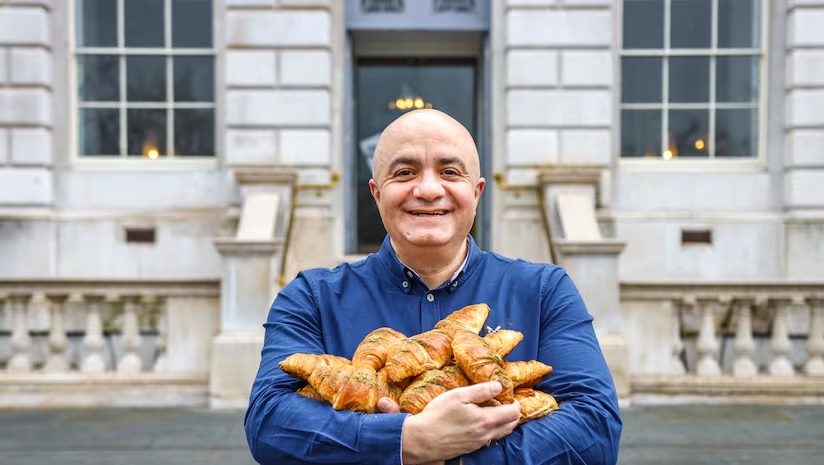

The FACT Dining Award winner on going from a refugee to a restaurateur.
If anyone were looking at the United Kingdom right now, they might assume it to be unwelcoming towards asylum seekers. Hotels are being set alight, protests are erupting outside them, and the government is reforming the road to citizenship. Chef Imad Alarnab tells a different tale – one of leaving war-torn Damascus for London, and going from an emerging talent to an establishment figure. After all, few people who arrived in the country in the back of a lorry can say they have met King Charles III – twice. Now, he has opened the restaurant Aram in Somerset House, and shares a story of hope over hate.
The food of love
Imad grew up in Damascus, Syria, and was born into a family that owned a textiles business. A future in food never seemed obvious. “Food was always about having fun – and luckily, it still is,” he smiles. “I never questioned whether I was good or not; it was about whether I enjoyed it. My love for food started from spending time with my mother. We would play with dough and mix kebabs. The kitchen was our special time. She used to feed me from her hand. It was fun and freedom.”
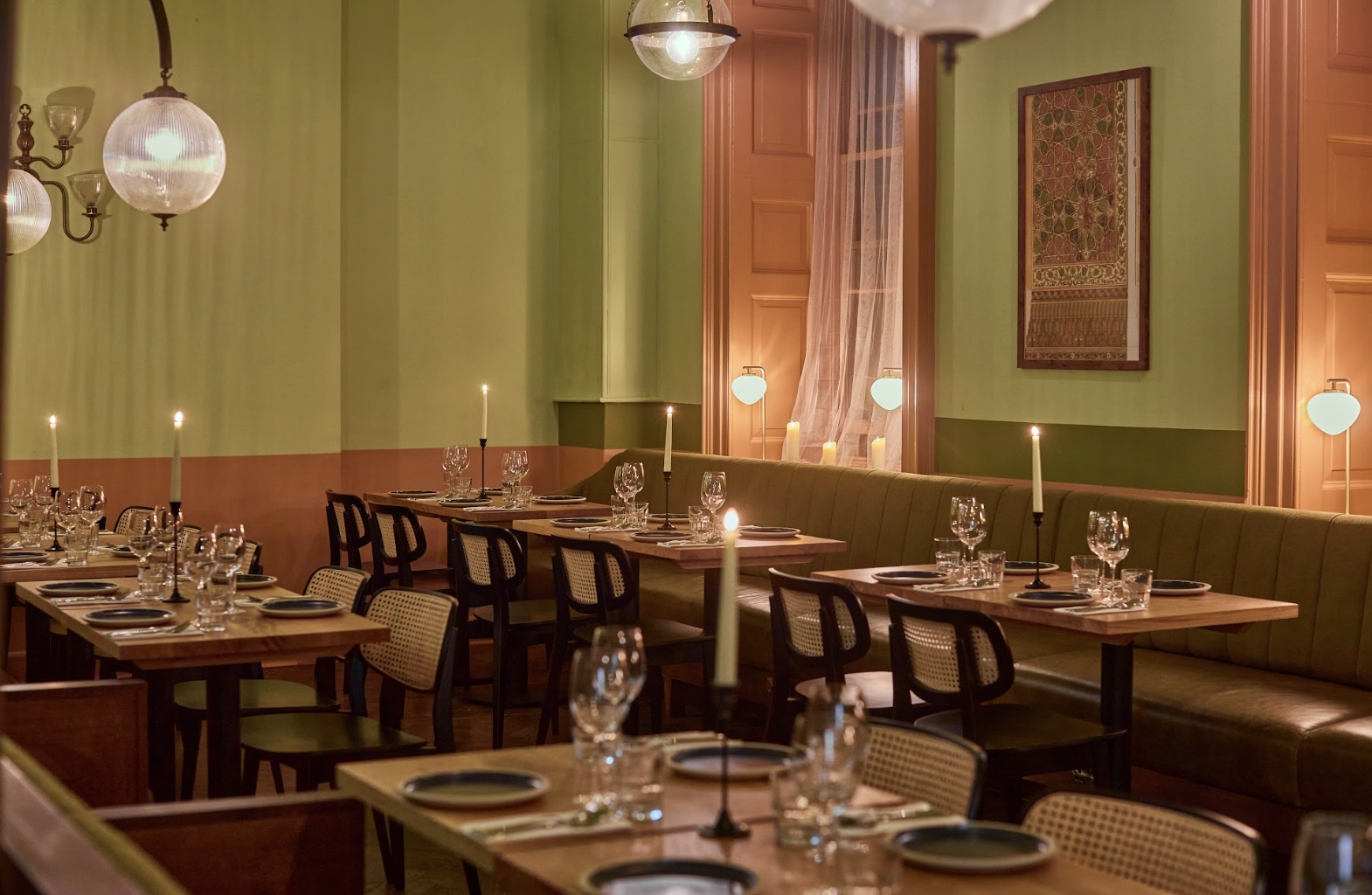
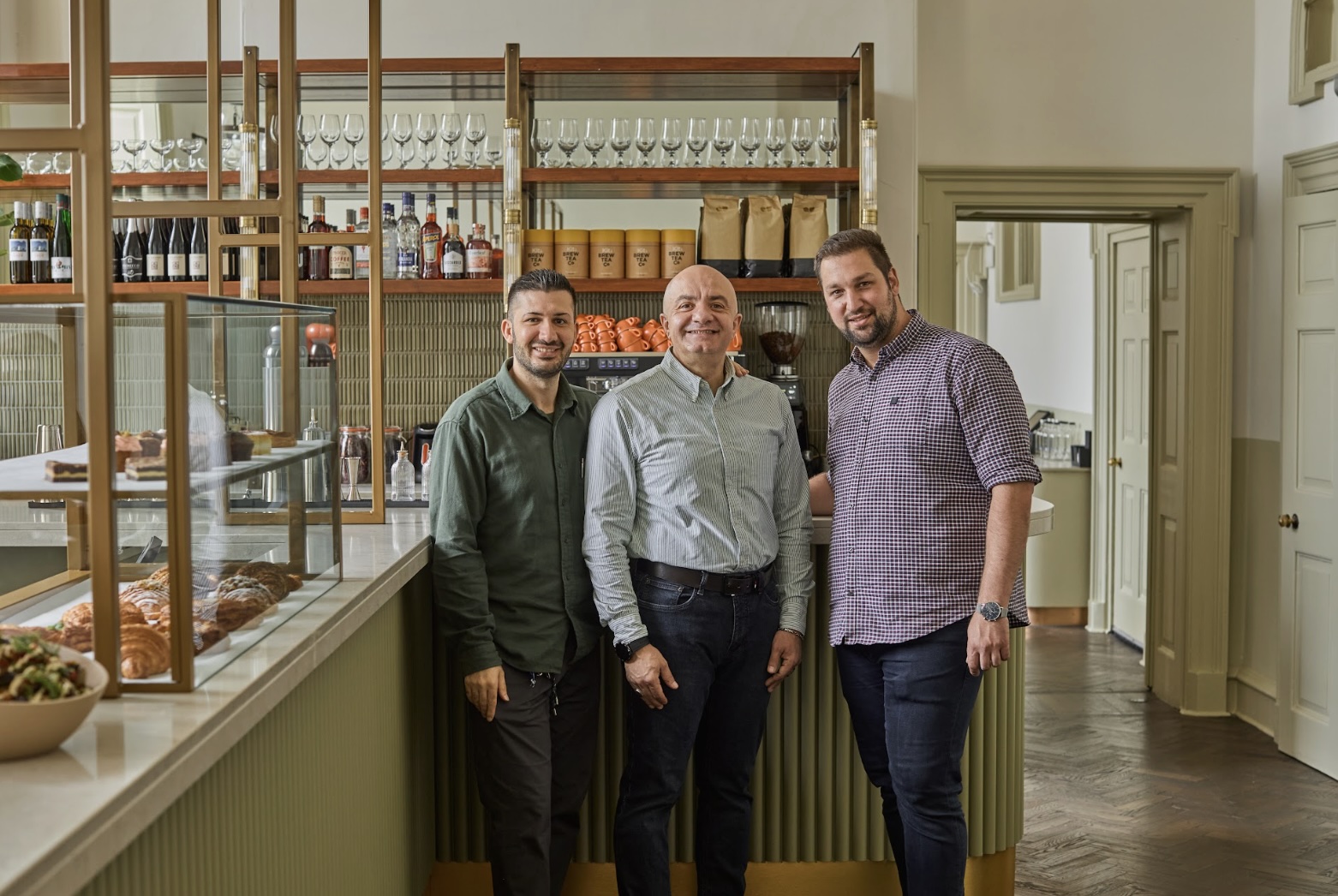
The bond between Imad and his mother came alive in his first restaurant, Imad’s Syrian Kitchen. Aram, his new opening at Somerset House, draws from a different inspiration – a homage to the Middle East. He explains: “Aram refers to a historical region from the Mediterranean to parts of Türkiye, Iraq, Iran and the Arabian Peninsula. It was the Aramaic period, the time of Jesus. I wanted Aram to unite, not divide – to show that Middle Eastern cultures are interconnected. It’s similar to what I love about London – everyone together.”
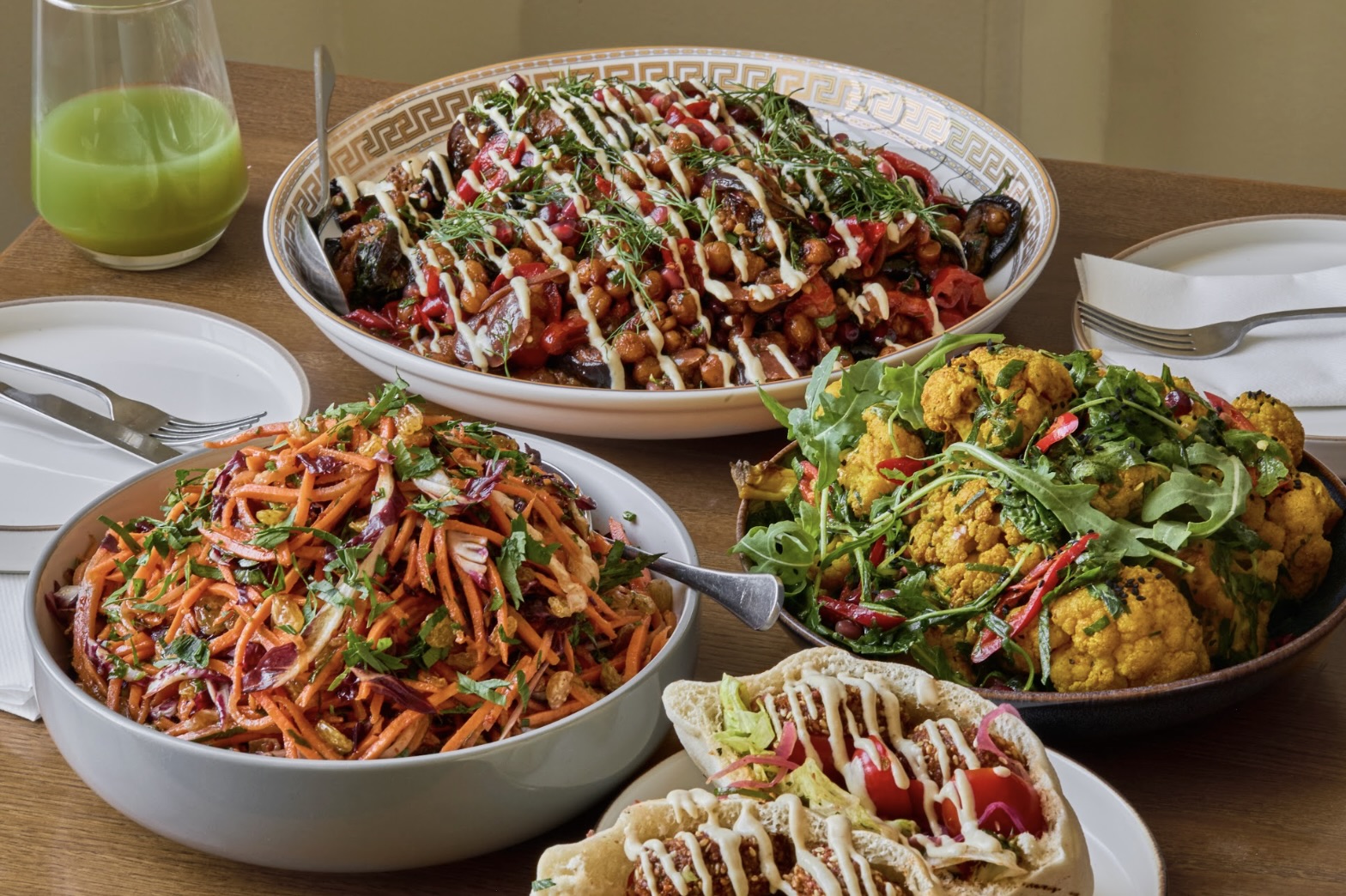
Aram’s menu spans salads to sweets, with dishes ranging from Baba Ghanoj to Shakshuka, and Date Banoffee to Zaatar Croissants. Situated in Somerset House, it’s a British institution and a location most chefs could only dream of. Previous chefs here include Skye Gyngell and Bryn Williams.
“A photograph of me was part of the Faces of London series. Somerset House carries huge historical weight, but also incredible diversity,” he reflects. “You find art from across the world – it represents Londoners and visitors, all in one place. I love that – a mosaic in the diverse community.”
Home and away
Imad has lived in the United Kingdom for ten years and counting, and holds a British passport. His journey to London saw him smuggled through Lebanon, Türkiye and North Macedonia, and he eventually arrived with a fake passport and £12 in his pocket. What does home mean to him?
“Home is my wife and my daughters. When I lost my houses and business in Syria, I didn’t have time to grieve – they weren’t my priority. My family was,” he recounts. “Everyone needs a city to belong to. For me, that was Damascus. Even when the revolution started, I still felt it was my city. But in 2013, I lost everything. I became deeply disappointed. I stayed until 2015, but it was no longer my home. Arriving at London King’s Cross changed everything. Everyone was from somewhere. I felt I belonged instantly.”
In 2024, Syria saw the end of Bashar al-Assad's 24-year rule. Imad has recently returned to the country for the first time and speaks of it almost like reciting a poem. “My love for Damascus is like my love for my mother – she passed away, but I’m still in love with her. For years, I thought the Damascus I loved no longer existed. Then, after all this time, I returned. I felt like someone told me, ‘your mother is alive’. It was full of hope, full of energy. I returned not as a wanted man, but as someone welcomed – like a hero.”
Reforms and refugees
On the day of our interview, the Labour government announced reforms for asylum seekers. The Home Secretary, Shabana Mahmood, aims to reduce arrivals and increase removals from the United Kingdom. Once Imad begins speaking on the subject, his passion is unmistakable.
“It’s a political failure. Politicians look for someone to blame, and refugees are the weakest group. Even if you took all asylum seekers out, it wouldn’t fix a single major issue: not the NHS waiting times, not the economy,” he sighs.
“It’s the same story as Brexit: promises of heaven, then years later everyone realises it was lies. Corrupt politicians hide behind blaming refugees. I know highly educated people paying taxes who now can’t get indefinite leave because of new rules. Yet, politicians who cheat the system face nothing.”
So, what is the biggest misconception about refugees? “It cost me £15,000 to reach the United Kingdom,” he emphasises. “I wasn’t trying to take anyone’s money. I was trying to save my life. Refugees are just people. You can’t say all British people are good; you also can’t say all refugees are bad. It’s beyond racism – it’s simply stupid.”
Belonging in Britain
Imad’s admirers span communities, critics and even the Crown. FACT hosted the first FACT Dining Awards London in 2025, where Imad’s Syrian Kitchen won the title of Best Middle Eastern Restaurant in the capital. “It was a huge honour. The competition was strong. I’m confident in Syrian cuisine, but when you’re up against other great cuisines, it’s natural to doubt,” he acknowledges.
In 2025, King Charles III visited Imad’s Syrian Kitchen during Ramadan. “It was an enormous honour. Meeting the King was beyond a dream. He wasn’t a stranger to Middle Eastern food; he knew ingredients and recipes. He was humble, down-to-earth and funny – it actually makes it confusing because you don’t know what to do when the King laughs with you,” he smiles.
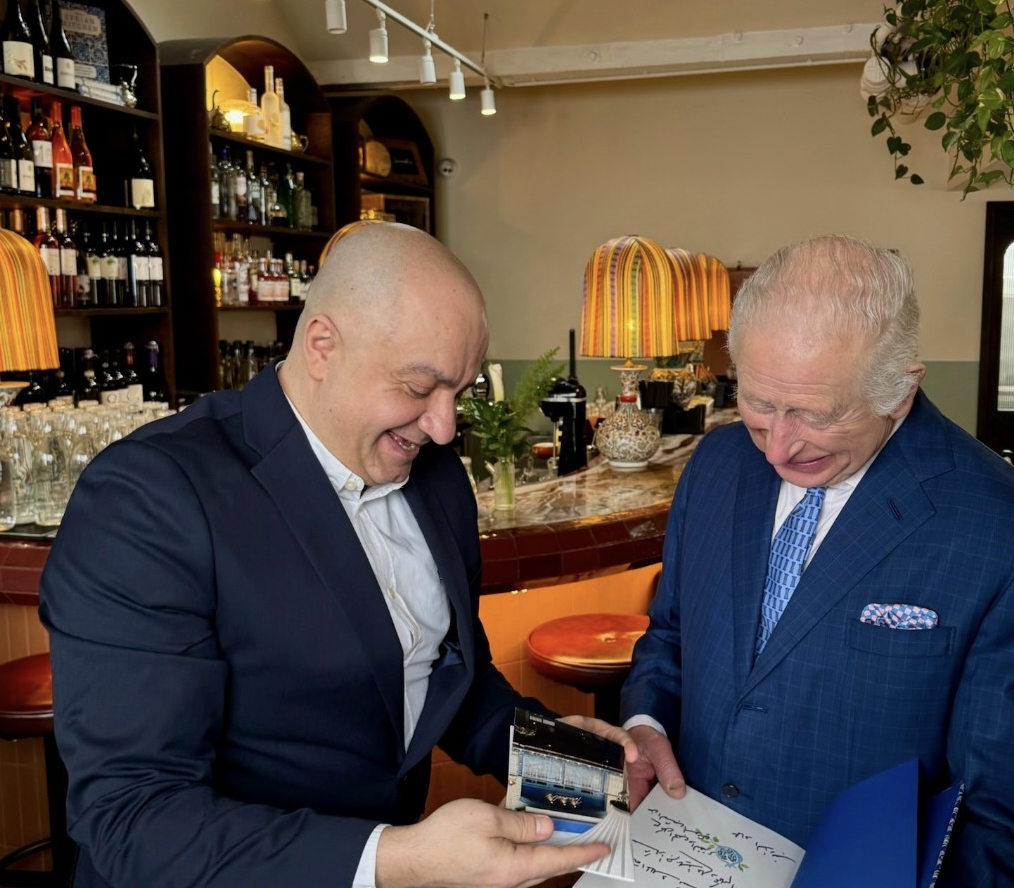
So, what does it mean to be British? “You can be Syrian and British, Indian and British, American and British. If there’s any country in the world that deserves to be great, it would be Great Britain.” When reflecting on his career, he concludes: “Everyone is more than their profession. I’m a father, a neighbour, a Muslim, a man.” And that is Imad Alarnab — he challenges not only how we understand refugees, but how Britain understands itself.
GO: Visit www.somersethouse.org.uk for more information.