


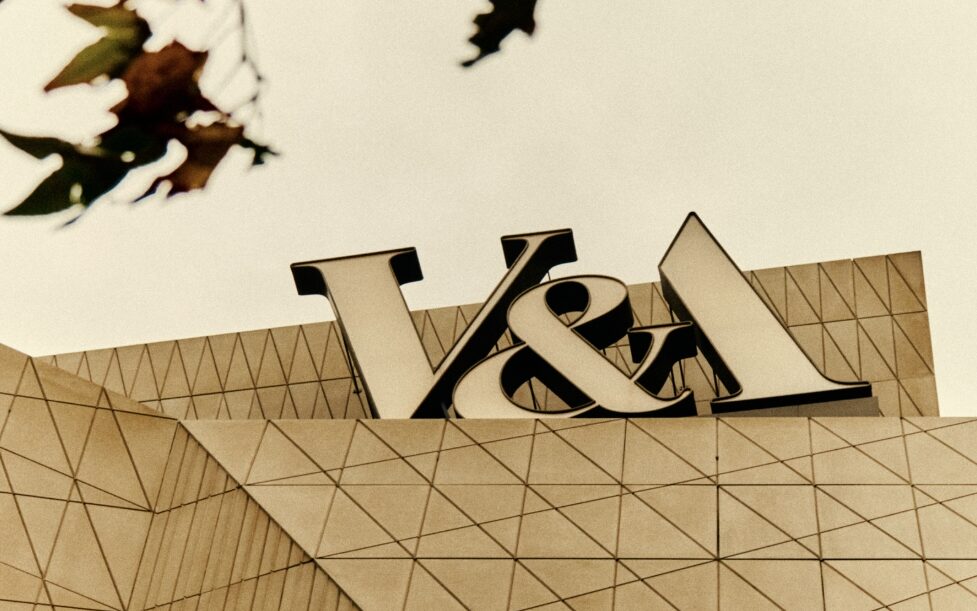

London’s newest museum opens in Stratford with a powerful debut exhibition tracing the story of Black British music.
V&A East is officially open to the public in Stratford’s Queen Elizabeth Olympic Park, marking a major new addition to London’s ever-expanding cultural landscape. Set alongside institutions including the BBC, Sadler’s Wells East and UAL, the museum arrives with serious ambition and an opening programme that makes an immediate impression.
Spanning 7,000 square metres, V&A East may be significantly smaller than its South Kensington counterpart, but it carries a cultural presence far beyond its size. From the outset, it feels like a museum with purpose, shaped not only by curatorial vision but by the communities around it.
That local connection is central to the museum’s identity. Developed with input from more than 30,000 people, V&A East has been shaped in collaboration with East London residents, schools and young creatives. Under the leadership of inaugural director Gus Casely-Hayford, the museum has been conceived as a place to nurture talent, encourage access and create a genuine sense of ownership among its audience.
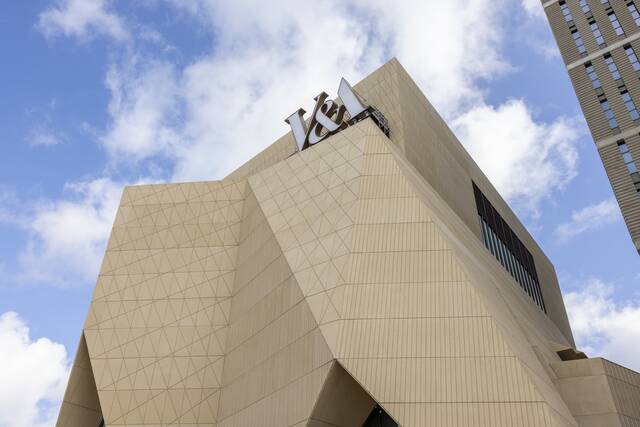
Designed by Irish architects O’Donnell & Tuomey, the building is bold yet welcoming. Inside, visitors will find three galleries, a rooftop terrace, a creative studio, a shop and a café run by Jikoni. The Marylebone favourite brings its signature mixed-heritage, no-borders cooking to East London, offering a refreshing alternative to the standard museum café. Expect strong coffee, thoughtful teas and dishes that range from turmeric and ginger chicken pie to macaroni dahl, alongside sweet options such as yuzu and pandan strawberry iced buns.
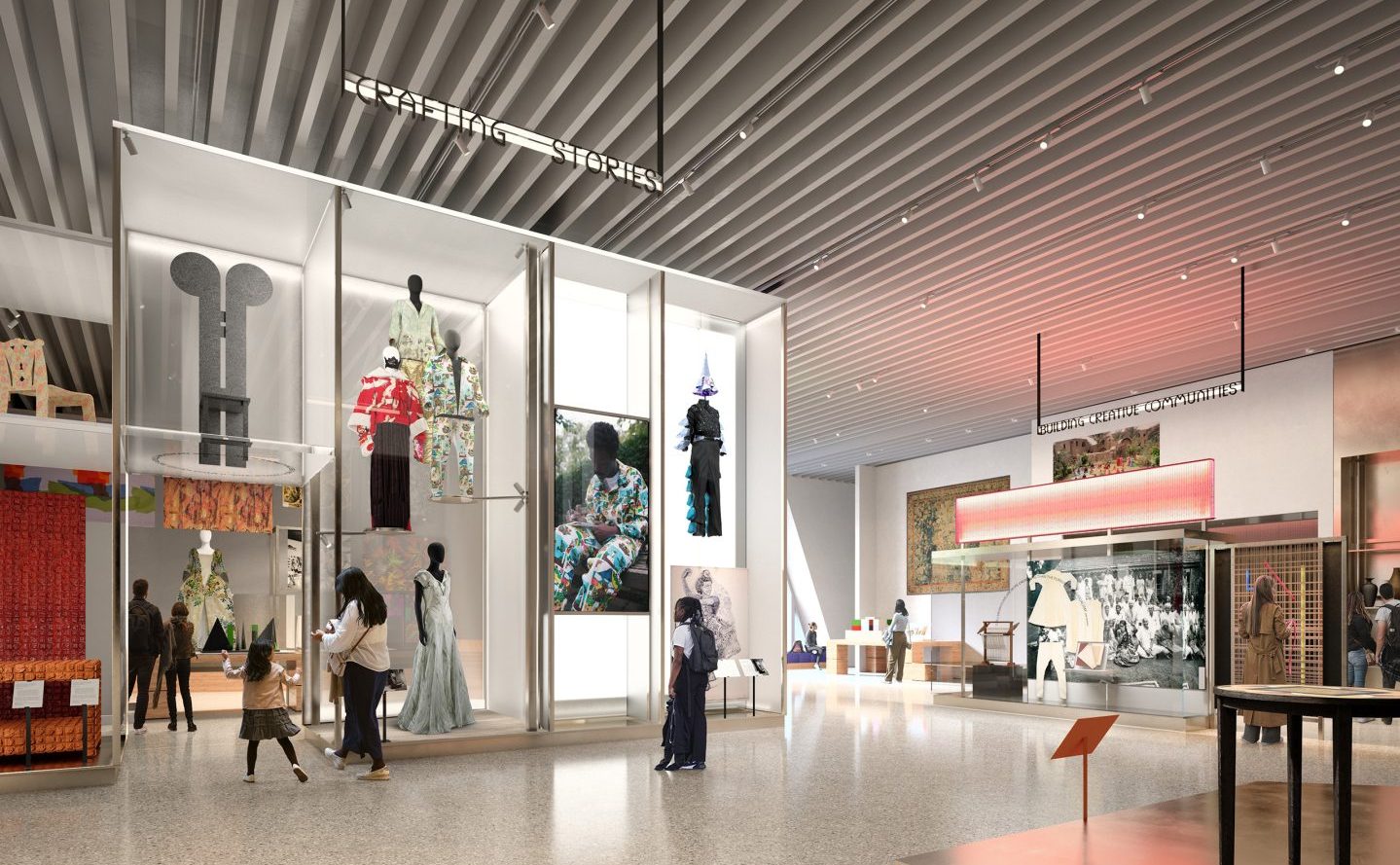
The museum’s free permanent exhibition, Why We Make, occupies the first two floors and offers a new way of engaging with the V&A’s extensive archive. Featuring 500 objects organised around themes including identity, activism and climate change, the display encourages a slower and more reflective kind of viewing. There is no strict route through the exhibition, allowing visitors to move at their own pace and form personal connections with works by names including Yinka Ilori, Yasmeen Lari, Vivienne Westwood and Comme des Garçons.
At its core, Why We Make is about inspiration. It invites young artists and curious visitors alike to reflect on the creative process and consider how design, fashion and art can shape both personal and collective identity.
Senior curator Zofia Trafas White said: “V&A East Museum’s Why We Make galleries offer a new way in to experiencing the V&A’s collection. Topical and resonant, the galleries look at objects through a contemporary lens and explore themes and issues that matter to our audiences most.”
The museum’s first temporary exhibition, The Music Is Black: A British Story, is equally compelling. Tracing more than a century of Black British music, it moves from jazz and reggae to garage, UK funky and grime, charting not just the evolution of sound but the social and political realities that shaped it.

One of the exhibition’s strongest features is its immersive audio guide, which responds to movement and creates a soundtrack that shifts as visitors progress through the space. From Sade’s “The Sweetest Taboo” to Janet Kay’s “Silly Games”, the music adds emotional depth and immediacy to the experience.
Archival objects further enrich the exhibition. Highlights include Joan Armatrading’s first guitar, original signage from the legendary 4 Aces and Blue Note clubs, stage outfits worn by Sade and Poly Styrene, a trilby loaned by Neville Staple of The Specials, and Stormzy’s Banksy-designed stab-proof vest worn during his 2019 Glastonbury headline performance.

Alongside the music and memorabilia are photographs and footage of jazz clubs, reggae concerts, house parties, protests and police raids. Together, they present a fuller picture of Black British life, celebrating cultural influence while confronting the violence, censorship and structural racism experienced by generations of Black Britons.
Beginning with the legacy of the slave trade and the racism that shaped Black life in Britain, the exhibition does not shy away from difficult histories. Instead, it creates space for reflection, while also highlighting the joy, resistance and innovation found in the music itself. Set within an institution that is itself grappling with its colonial past, the exhibition feels both timely and necessary.
By the time visitors reach the contemporary artists featured at the end of the show, the message is clear: while progress has been made, institutional racism within the industry remains an ongoing reality. Their presence serves as both a celebration and a challenge.
Crucially, The Music Is Black is only the beginning. V&A East has already outlined a broader cultural offer, from New Work: Making East London, which brings together commissions and displays by names including Es Devlin, Lawrence Lek, Rene Matić and Carrie Mae Weems, to the nearby V&A East Storehouse, home to the now-open David Bowie Centre. Together, they position V&A East as one of London’s most compelling new cultural destinations.
Where: V&A East, 107 Carpenters Road, Stratford, London E20 2AR
When: Open daily from 10am to 6pm
Contact: www.vam.ac.uk