



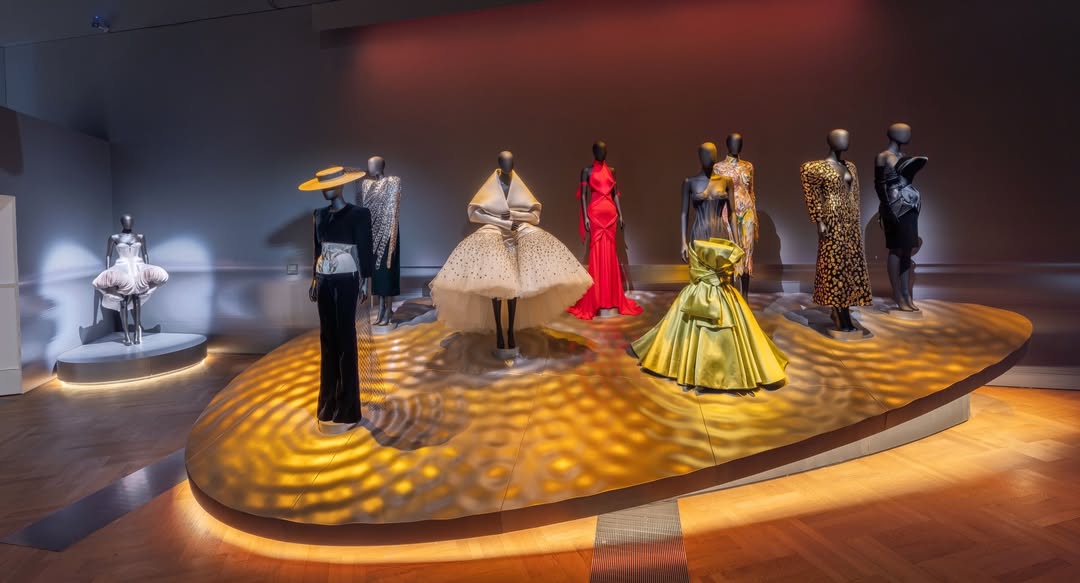

The V&A's latest exhibition shines a much-needed spotlight on Elsa Schiaparelli’s iconic career.
Elsa Schiaparelli was a pioneer of fashion design, creating a singular world that would leave a lasting mark on the industry for decades. Bringing that vision to life is the latest exhibition at V&A South Kensington, Schiaparelli: Fashion Becomes Art.
Exploring her legacy with flair and imagination, the UK’s first exhibition dedicated to the designer traces Elsa’s life and career from childhood to death, before moving into the evolution of the Schiaparelli house under current creative director Daniel Roseberry. The exhibition features more than 200 objects, including garments, accessories, jewellery, paintings, photographs, sculpture, furniture and perfumes, spanning the 1920s to the present day. It also places particular emphasis on Schiaparelli’s deep connection to Europe’s avant-garde arts scene.
Elsa Schiaparelli famously said, “For me, dress designing is not a profession but an art”, and that sentiment runs throughout her body of work. Her designs were infused with shock, wit and surprise, consistently challenging convention and rethinking what fashion could be. That instinct for disruption helped place her work firmly in the spotlight, offering a bold alternative to an industry that often favoured restraint.
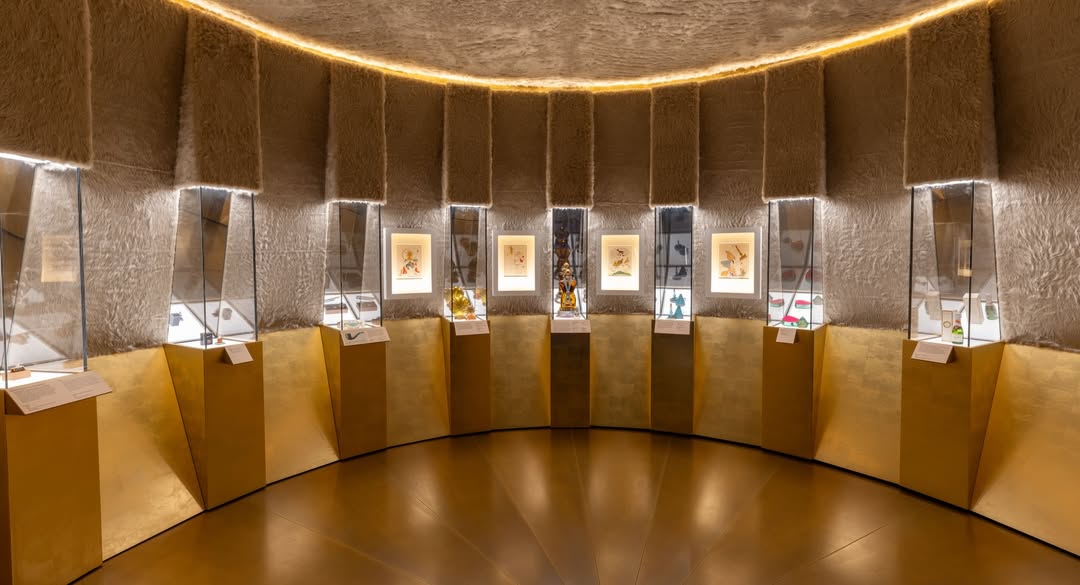
Born in Rome in 1890, Elsa began her fashion career in her thirties, opening an atelier in Paris in 1927. There, she introduced her now-famous trompe-l’œil sweater, a black-and-white knit featuring optical illusions that mimic details like bows and waistcoats. Her distinctive creative vision quickly found an audience. By 1932, she employed 400 people, and Vogue described her as “the designer of the most exciting clothes in Paris”. She later introduced her flamboyant and unconventional designs to the UK through her Mayfair store, becoming the first to bring surrealist fashion to London.
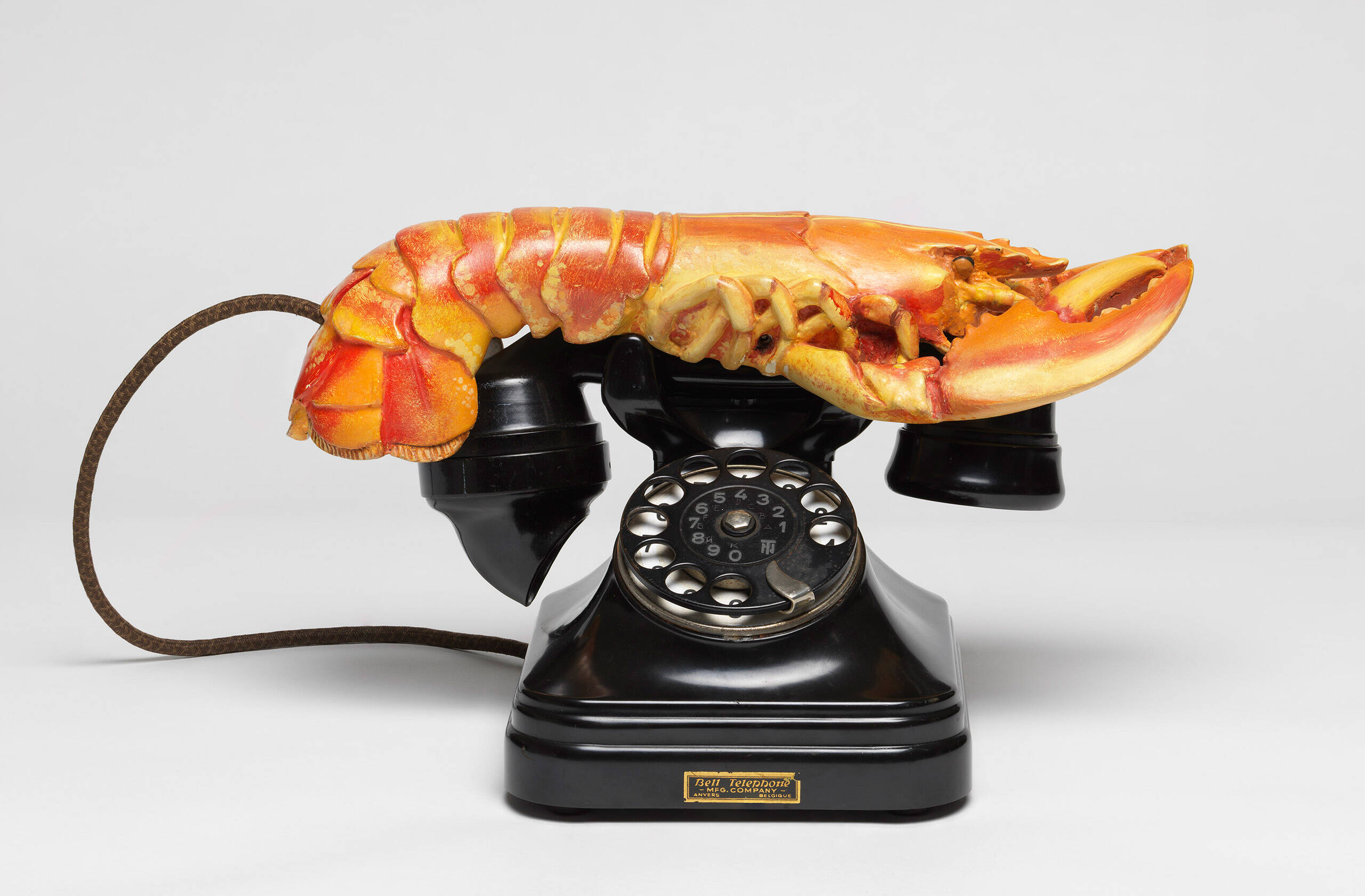
Her surrealist vision was strengthened through collaborations with some of the most celebrated artists of the time, including Salvador Dalí, Jean Cocteau and Leonor Fini, with many of those creations included in the exhibition. Among the standout pieces is the 1937 Lobster Dress, created with Dalí. The party dress features a lobster painted across the front by silk designer Paul Sache. It was famously worn by Wallis Simpson and photographed by Cecil Beaton in the grounds of the Château de Candé ahead of her marriage to Edward VIII, after which she became the Duchess of Windsor.
Another highlight from her partnership with Dalí is the Skeleton Dress from 1938, featuring padded ribs and a spine of cotton wadding protruding through black crêpe. Displayed alongside it is a note from Dalí himself, which reads: “Dear Elsa, I like the idea of ‘bones on the outside’ enormously”, a tribute to her surrealist sensibility and a sign of the creative exchange between the two.
Elsa ensured that every detail served a purpose beyond the expected. From a wool suit finished with buttons inspired by Commedia dell’arte masks to a sleeveless ruched silk jersey dress with a zip running from hem to navel, her work consistently challenged ideas of taste, beauty and normality.
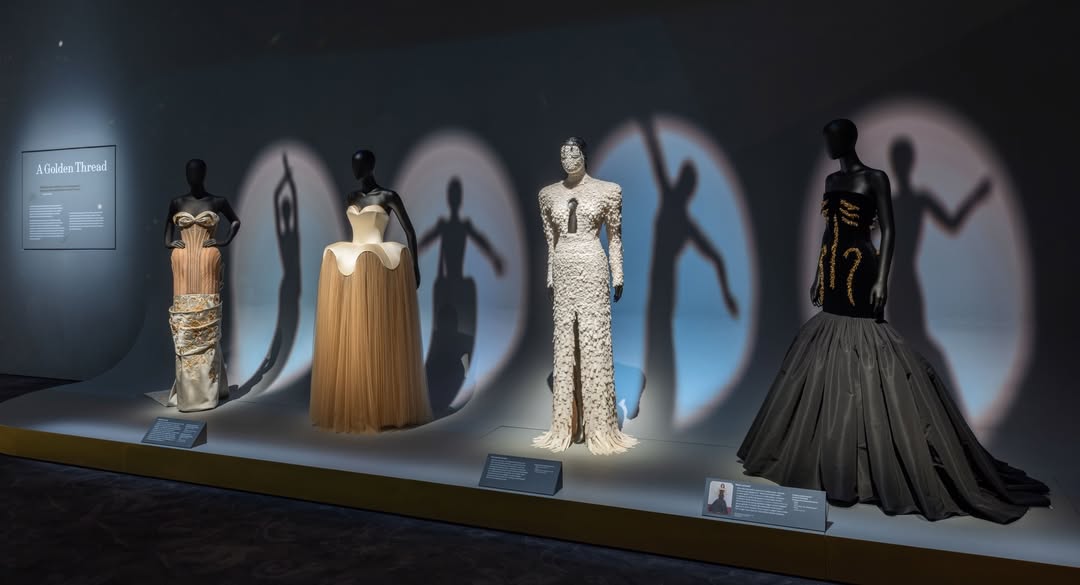
In the 21st century, Daniel Roseberry has continued that legacy as Schiaparelli’s creative director since 2019, following the house’s revival in 2014. His contribution has been significant, respecting Elsa’s original codes while propelling the brand into a new era.
His designs have become especially prominent on the red carpet, and many of those contemporary looks also appear in the exhibition. Visitors can expect to see Ariana Grande’s custom pink satin Schiaparelli gown from the 2025 Oscars, as well as the shimmering, deep red Wicked-inspired dress she wore during her performance on the same night. On entering the exhibition, guests are also greeted by the striking look Bella Hadid wore to the 2021 Cannes Film Festival, complete with a gilded brass necklace shaped like trompe-l’œil lungs and adorned with rhinestones.
Other culturally significant pieces include Dua Lipa’s dress from the 2024 Grammy Awards, which pays tribute to Elsa Schiaparelli by reinterpreting the house’s Skeleton Dress. With its striking anatomical detailing, the design echoed one of Elsa’s most recognisable motifs while reaffirming the continued relevance of her visual language.
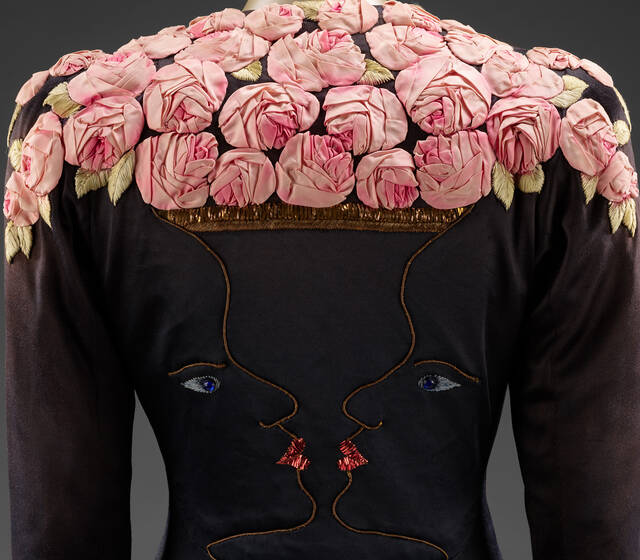
Roseberry’s contemporary interpretation of Elsa’s work carries real weight throughout the exhibition, highlighting how fashion and culture have evolved since her death in 1973. He has carved out his own identity within the house without losing sight of its roots, creating dramatic, memorable pieces that still retain Elsa’s instinct for the outrageous. It is no small task. What was considered shocking in Elsa’s day lands differently in the digital era, making Roseberry’s ability to create fashion that still feels provocative all the more impressive. In many ways, today’s viral red carpet moments are the modern equivalent of Elsa’s boundary-pushing designs.
Ultimately, Schiaparelli’s work has always lived at the intersection of fashion and art. For anyone interested in how those two worlds collide, this exhibition is well worth a visit. Head to the V&A for a vivid lesson in creative rebellion and a reminder that dressing boldly can be an art form in itself.
Tickets are available now, priced at £28 on weekdays and £30 on weekends. Advance booking is highly recommended.
Where: The Sainsbury Gallery, V&A South Kensington, Cromwell Road, London, SW7 2RL
When: Running daily until 8 November 2026
Contact: www.vam.ac.uk