




Gold and greatness combine at Ramses and The Pharaohs' Gold: The Exhibition.
Today, we’re all so used to taking selfies. In Ancient Egypt, the equivalent of sharing your image would have been commissioning an artisan, having a statue built, and then having it live on forever for the next 3,000 years. Nowhere is that more apparent than with Ramses II, whose image can be found across four 20-foot statues at Abu Simbel. Now, visitors will be able to come face to face with him at Ramses and the Pharaohs' Gold: The Exhibition at NEON in Battersea Power Station, which is open from 28 February to 31 May.
FACT attended the preview of Ramses and the Pharaohs' Gold, which included an introduction from the historian and broadcaster Dan Snow, and the Secretary-General of Egypt’s Supreme Council of Antiquities, Zahi Hawass. Dan explained: “Welcome to a relic of 20th-century power, Battersea Power Station. We Brits are quite proud of that, and then you come to the exhibition and you realise that power didn’t last very long. We’re talking about timeless power today. Very few people have been able to outlive time itself.”
Dr Mohamed Ismail, Minister of Antiquities of Egypt, added: “Ramses the Great was a remarkable pharaoh who helped shape the legacy of Egypt. This exhibition provides a rare opportunity for people to come face to face with the world of Ramses in all its glory before the objects are returned to Egypt and placed at the newly opened Grand Egyptian Museum. It is my hope that by discovering the story of Ramses, audiences will be inspired to explore Ancient Egypt further and to deepen their appreciation for its enduring cultural importance.”

Like a pop star, Ramses and the Pharaohs' Gold: The Exhibition has already toured around the world, travelling from San Francisco to Tokyo. This experience brings together 180 treasures that are more than 3,000 years old. The displays combine historical artefacts with a state-of-the-art virtual reality experience. It’s a rare opportunity to see objects that have never left Egypt and are coming to the UK for the first time. Visitors can expect to see animal mummies, amulets, carved sarcophagi, jewellery and royal masks. And, the highlight is the original wooden coffin that once held Ramses’ mummy.
A ruler of the 19th Dynasty, Ramses reigned for nearly 67 years – that’s almost as long as The Queen, who reigned for 70 years, and far longer than Tutankhamun, who ruled for only 10 years. Ramses helped shape the height of Ancient Egyptian civilisation. He became famous for his monumental building projects, military leadership and diplomatic skill. So much so, he is the only pharaoh to have “the Great” in his title.
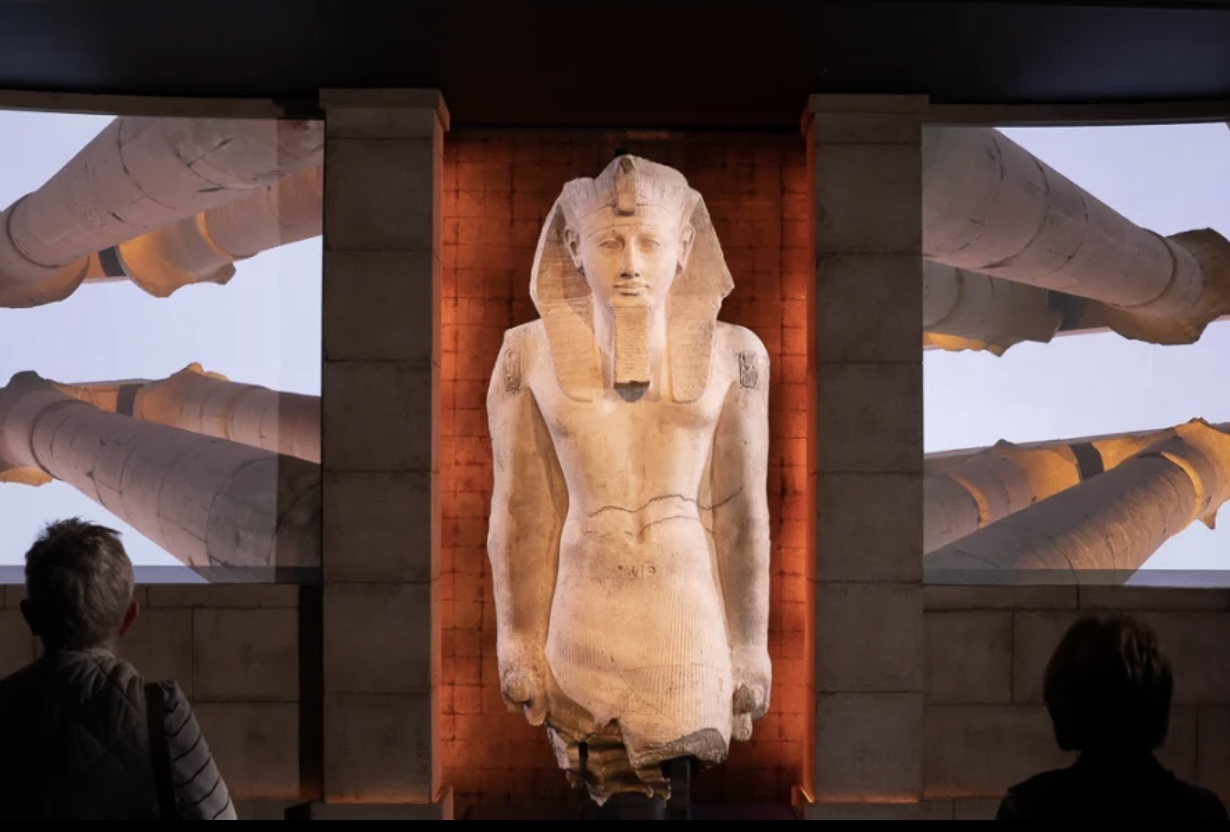
At Ramses and the Pharaohs' Gold: The Exhibition, each section has been carefully curated. Each room features bespoke music created especially for it. The introductory video sets the scene like a blockbuster film, complete with a widescreen display, dramatic music and recreations of battles.
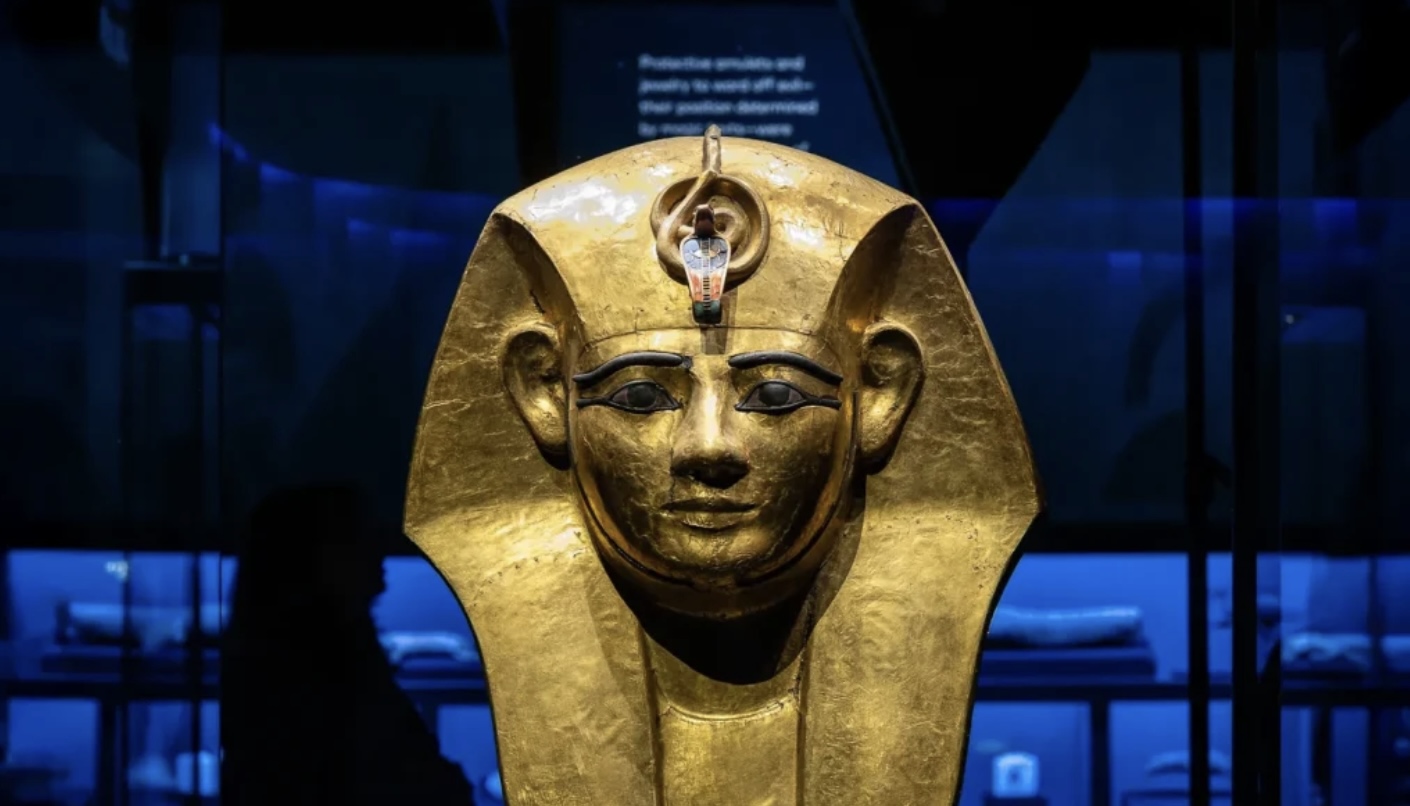
Highlights include King Amenemope’s mask, made of thick sheets of gold, and General Wendjebauendjed’s funerary mask, crafted from glittering gold with striking eyes. While it’s easy to be struck by the larger colossal statues and royal coffins, don’t overlook the smaller items. There’s a dedicated area exploring women’s roles in Egypt, and pieces honouring his wife, Nefertari. No other Egyptian king celebrated his wife as much as Ramses did Nefertari. And, alongside the expected mummified cats and scarabs, there are also the unexpected mummified crocodiles.
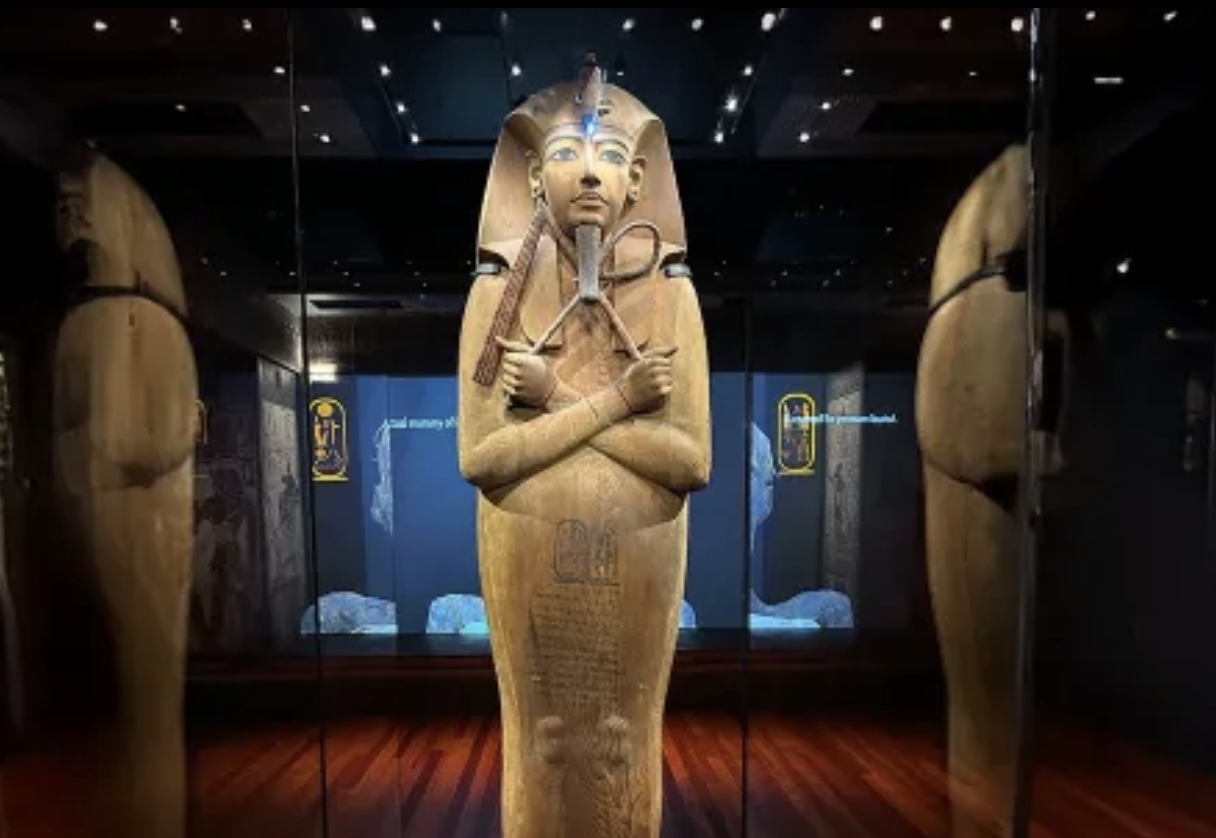
The anticipation builds towards Ramses’ coffin, which is in one of the final rooms. Discovered in 1881 at Deir el-Bahari, it was moved to protect it from tomb robbers. The coffin is made of cedar wood, originally painted yellow and once covered in gold. Decorated with an erect cobra on his head and a braided beard beneath his chin, it feels as though you are coming face to face with him and with history.
Egypt’s antiquities have continuously been in the spotlight, but this attention has grown with the recent opening of the Grand Egyptian Museum in Cairo. The Arab Spring, the COVID-19 pandemic and economic crises have all taken a toll on Egypt’s tourism sector, and visitor numbers have declined. So, if you needed a reason to visit the country, this is it – and who knows, the next selfie you take may well feature Ramses II against the timeless backdrop of Egypt.
GO: Visit https://ramsestheexhibition.co.uk/london for more information.